Studio memo - Year 5, Season 2
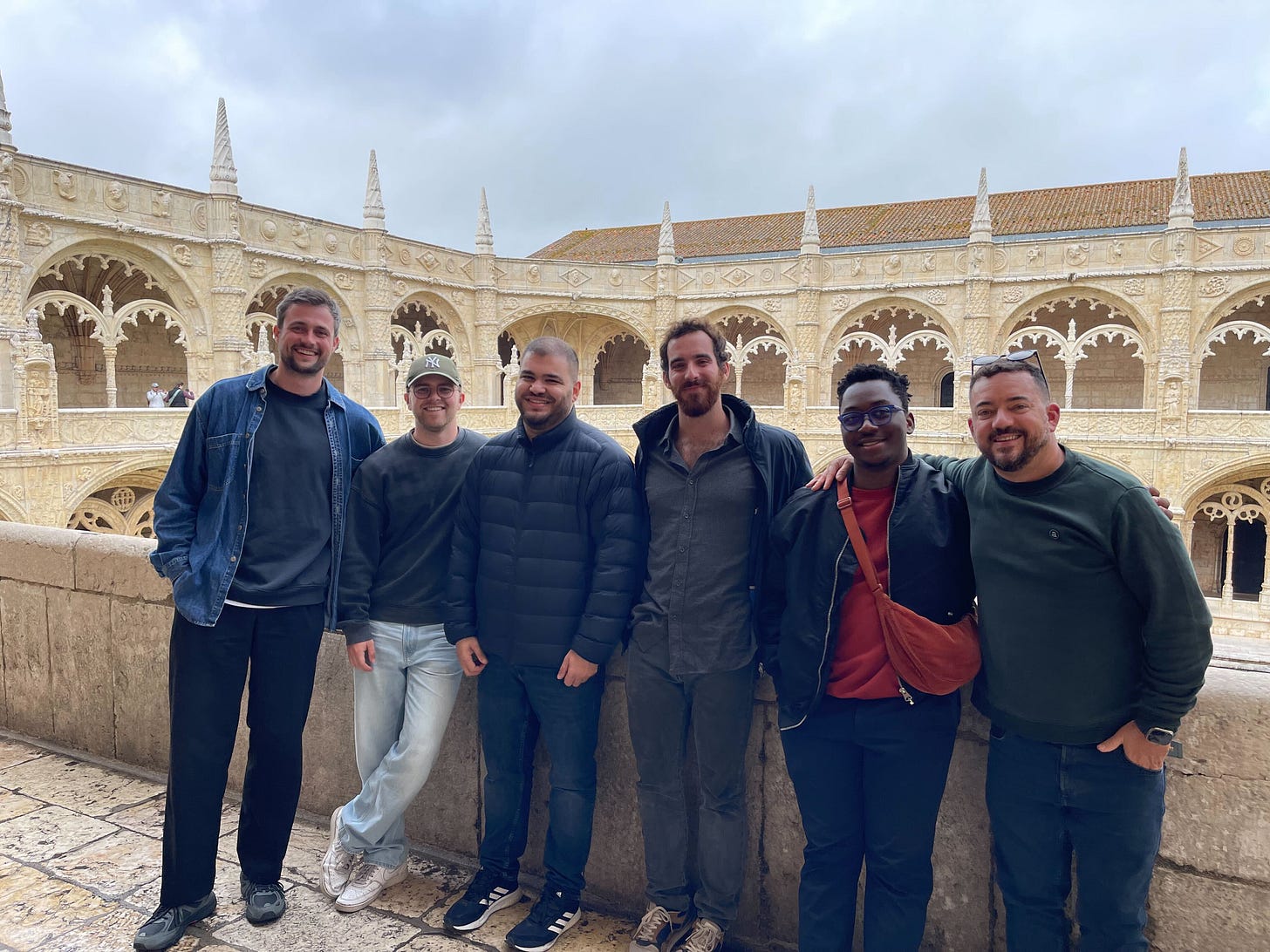
Writing this on the plane with Yous from Ericeira 🇵🇹 after another great meetup with the team. It really feels much more comfortable for everyone now. People are starting to ‘get’ the rhythm of meeting up 3x a year, using the facetime to have important conversations and solve tough problems on the spot. This season’s theme was The Feedback Loop. We introduced it because even though we’ve set up a really clear system for how we operate, we didn’t really pause to evaluate whether we were doing the right thing or really making an impact on the business. We also had some obvious challenges with our metrics. My usual MO would be to worry about them, come up with a solution and share it with the team. Since I am far from the smartest person on the team, this season I got curious about what would happen if everyone would help out. To make it easy for everyone to spot issues, we set out to introduce as many public feedback loops as possible. Let’s get into it.
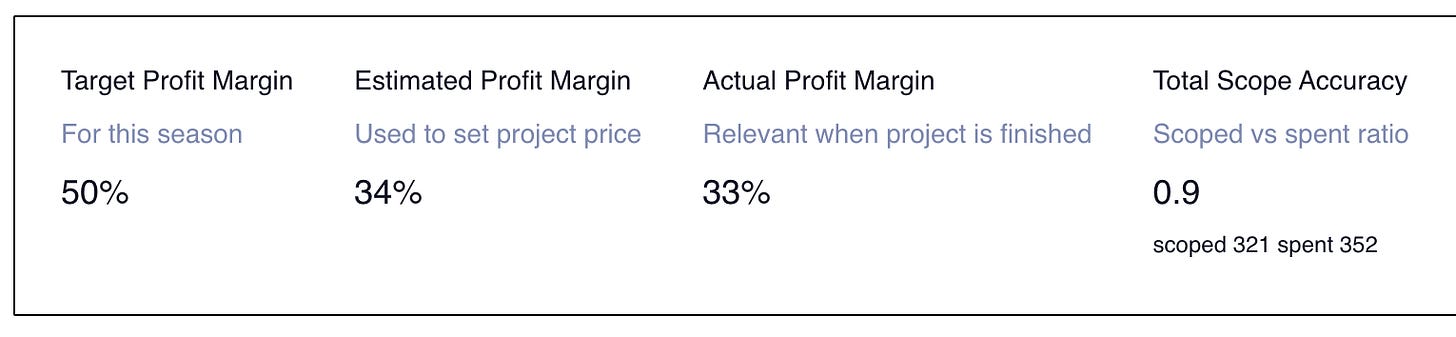
LoopsEveryone has context During our initial brainstorm, something stood out to me: Everyone on the team actually cared whether a project was profitable, whether it was good for the business or whether it was a good financial decision to take on a client. The problem was that no one had access to most of those metrics. Projects would go over budget & the team wouldn’t even know what that really meant or how bad that was for the business. We don’t have formal project managers - just 2-person teams; a designer and a developer. The most senior one is responsible for the project going according to the plan, while both communicate directly with clients. The first thing we did was create a quick ugly dashboard for everyone to see the live profit margin of a project. Every week, the team reviews it so they can adjust their strategy where necessary. Instead of us checking on people top-down, this reversed the process - team members have come up to me and pointed out problems with pricing, scope or client requests that might ruin the profits. They have all the context of the project itself, so they’re able to make intelligent decisions and solve problems proactively.
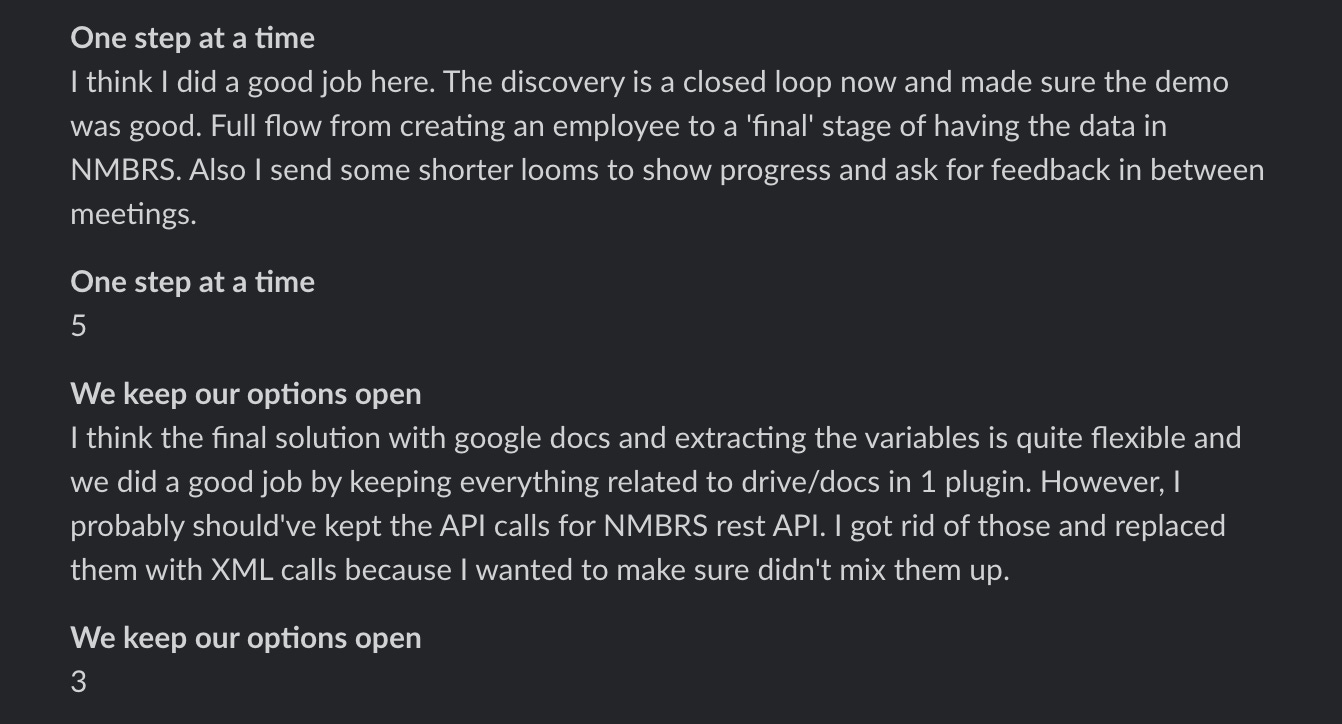
Self-reviews We also wanted people to evaluate their performance and output more often. Instead of someone with a shallow understanding ‘checking’ their work, we thought it’d be more interesting to self-review. Luckily, we’ve defined our principles to make it super clear what kind of attitude we expect. we used them to design multiple forms for people to fill in:
All of these reviews are posted to our #feedback channel in Slack for everyone to see. Aside from the self-reflection, the data is super valuable for us - we can all see what people need to be trained on and what projects made sense in hindsight.
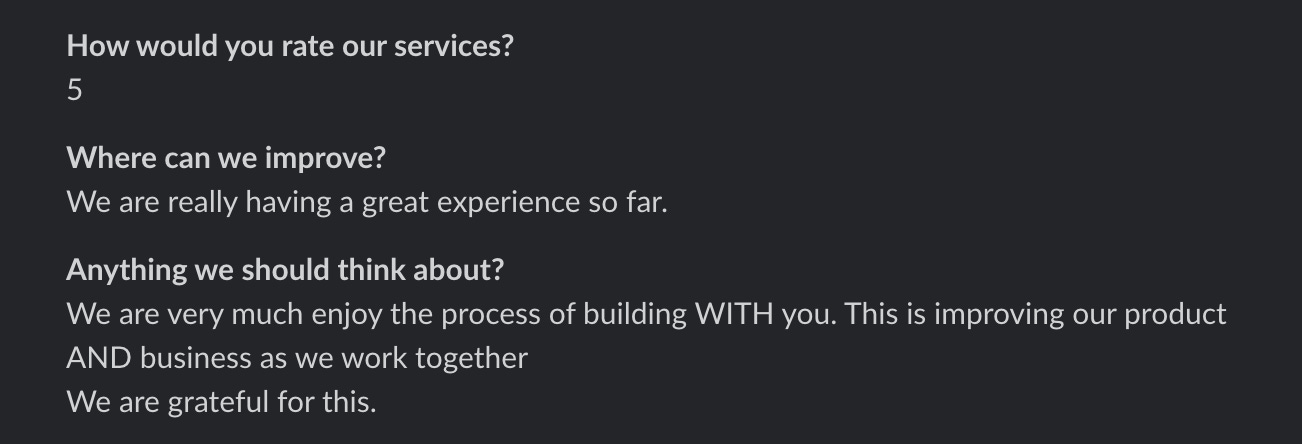
Client feedback We also formalized asking for reviews from clients (not entirely unimportant) - we always had a feeling for this because we work quite closely with them, but it was nice and reassuring to ask them for a more formal review. Just like the other data, this is posted to a public channel for everyone to see - nearly every review has been 5 out of 5, which also just brings great energy. With all those loops in place, we had much more sources of info to find opportunities.
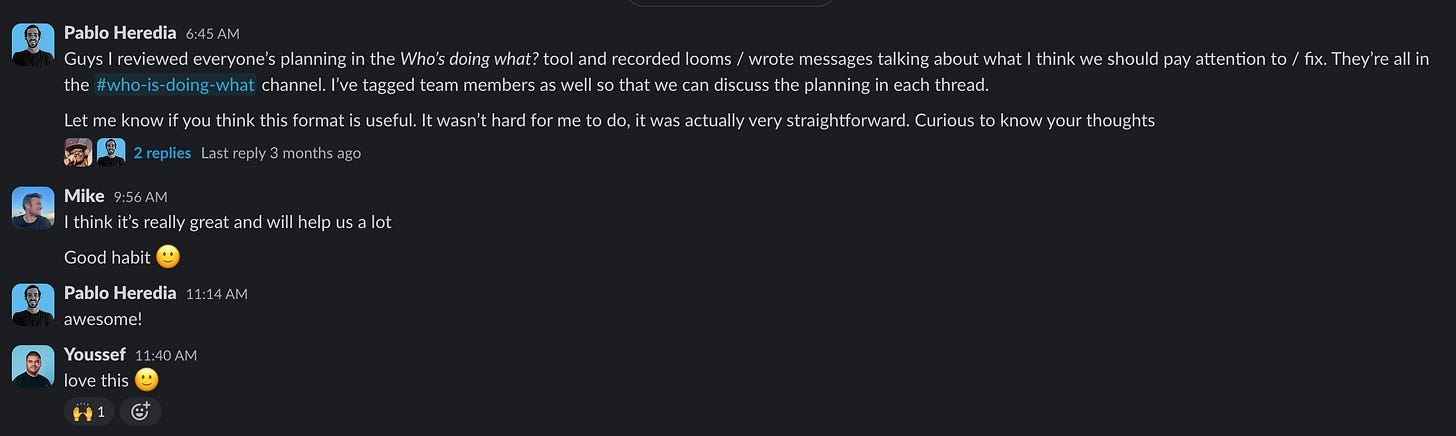
Solving problems We set up a biweekly cycle with a subset of the team; Yous, Naël, Pablo & me. Our only goal was to find the biggest problems and opportunities & act on them as soon as possible. We created scorecards to break down our important metrics into smaller groups. Each role owns a different part of the scorecard, sharing problems in their area so we understand where we’re underperforming. I created a little tool to openly track our biggest problems and opportunities, what we thought the root of the issue was and what we were trying to do about it. It became a great way for me to share my thought process with the others. They challenged our priorities, brought in new ideas and sharpened my thinking. Most importantly, we took action - we got into this crazy flow of solving problems in a super scrappy way, often by building quick internal tools or quick Notion docs. We saw some problems we’ve had for months disappear in a day. No excuses, just ship something tangible and try it. It took us about a month to set everything up, then the feedback loop was in full effect.
Did it work? Our efforts really worked out - all projects were profitable with a few positive outliers, our utilization rate has improved massively & our client base & revenue grew significantly as well. Arguably our best season yet. What stuck with me most is the momentum - actively improving on a weekly basis creates a positive force that pulls everything else along. I really want to keep that energy going.
GrowthAside from the theme, we worked on a few things to grow further. Selling plugins We spent quite some time & resources building and maintaining our Bubble plugins. Even though they were great for brand awareness & brought in some revenue each month, we spent quite some energy supporting them & the bottom line wasn’t in our favor. Zeroqode reached out to us and did an offer, which we took as a chance to take our chips off the table. The cash gives us a buffer to start hiring new people, which helps everything else we want to do.
New website & brand After (only) 2 years of us going back and forth on this, we shipped our new website and brand. I’m so happy to have it out of the way and it was really well received. I’m mostly glad we decided to build it on Bubble, as it’s basically become a showcase for what we can do on the platform.
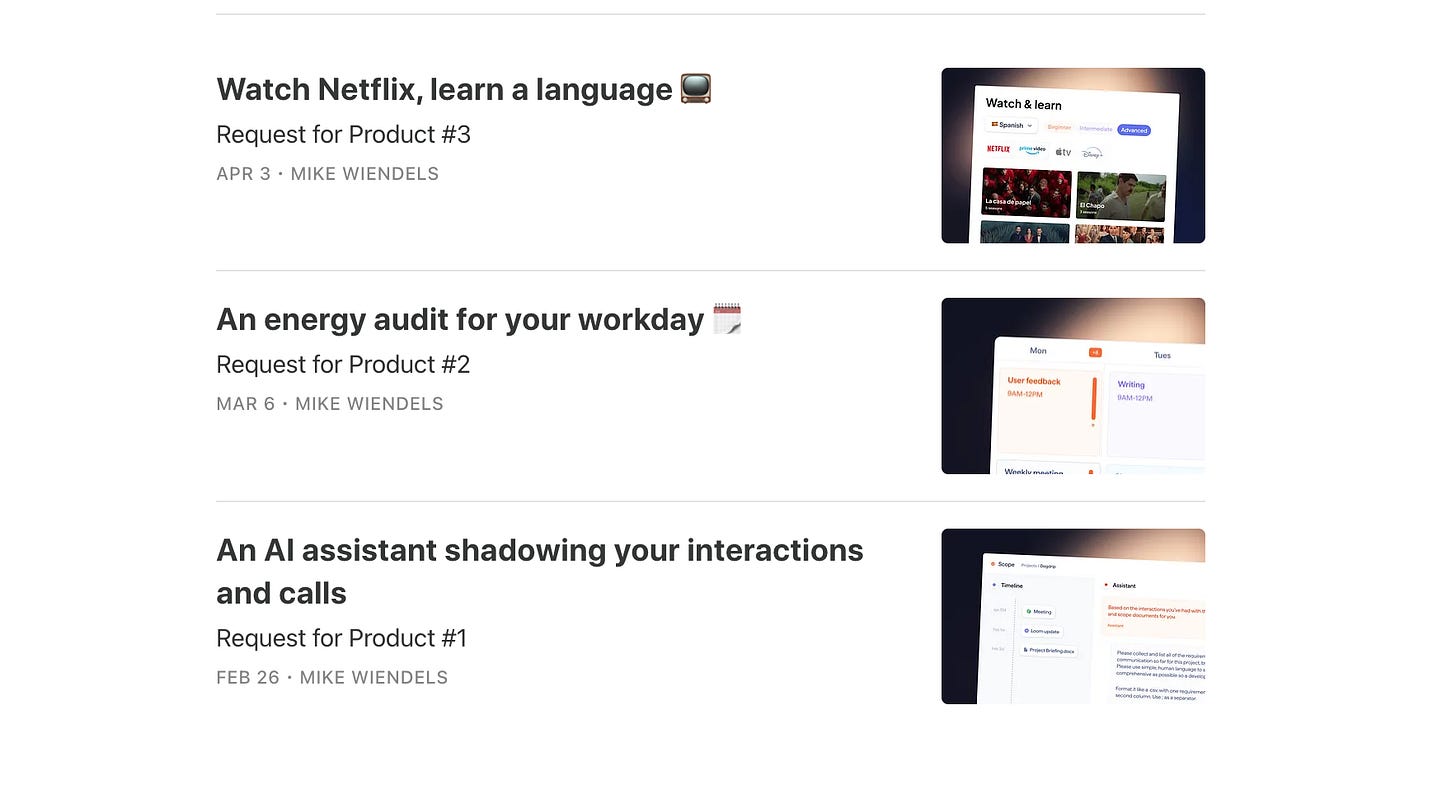
Request for Product I wanted to be able to share some content that shows how we work, not just what we work on, so I started creating these little experiments in Request for Product. I shipped a few & tried to iterate on the format with each one. I like that it allows people to dig a little further into the ‘lore’ around Minimum when they want to, so we’ll probably do more of these going forward.
Experiments with AI & low-code We’ve been doing a lot of AI features for clients, so we felt like we needed to explore this a bit more and go down the rabbit hole. It was great to explore vector databases, RAG, Langchain and all of these other tools in the ecosystem. A big insight for me is that they’re actually really complementary to tools like Bubble because a lot of the ‘heavy lifting’ is delegated to the large language model. Since a lot of the value is in the prompt, all you need is an interface layer, so coding it by hand makes even less sense.
We built a few demos, mostly around sales processes, like scoping and briefing, as well as a RFP around language learning. So many ideas that used to be impossible just became so easy to build. It’s super exciting.
Hiring trainees We’re on the lookout for a new design trainee. Being able to find & hire juniors and train them on the job would be a massive asset for the studio. I think the best agencies are vehicles for learning - exposing people to many different projects so they can grow quickly & hone their craft. That’s definitely our goal. If you’re reading this and you know a designer with a lot of potential - let me know!
What’s next?We’re at a quite sustainable base for the agency, especially once we add more junior team members. I’ve been seriously contemplating whether we should aim for doing this at 3x the size and try to scale what we’re doing now. A lot of the value of what we do is in our boutique size and agencies generally don’t scale very easily. I’ve also been thinking about ownership a lot. We always push for what we think is right for the client and their product, but incentives are always aligned differently when working together in an agency relationship. Honestly, I’m just afraid we’ll be nearing a bit of a local maximum if we just keep making marginal improvements from here. A few potential opportunities popped up on our radar recently:
My chronic shiny object syndrome flares up just reading that - I know I should shut it all down in the name of focus. But since our foundation is quite solid, I think we can afford to try out some new things, at least for a few months, to look for 10x improvements. Some of these opportunities could be huge, but we don’t know yet - the trick will be to keep the experiments small. The theme for this season is Small bets. I’ll let you know how they went in September. Cheers, Mike and the Minimum team.
|