Studio memo - Year 3, Season 3
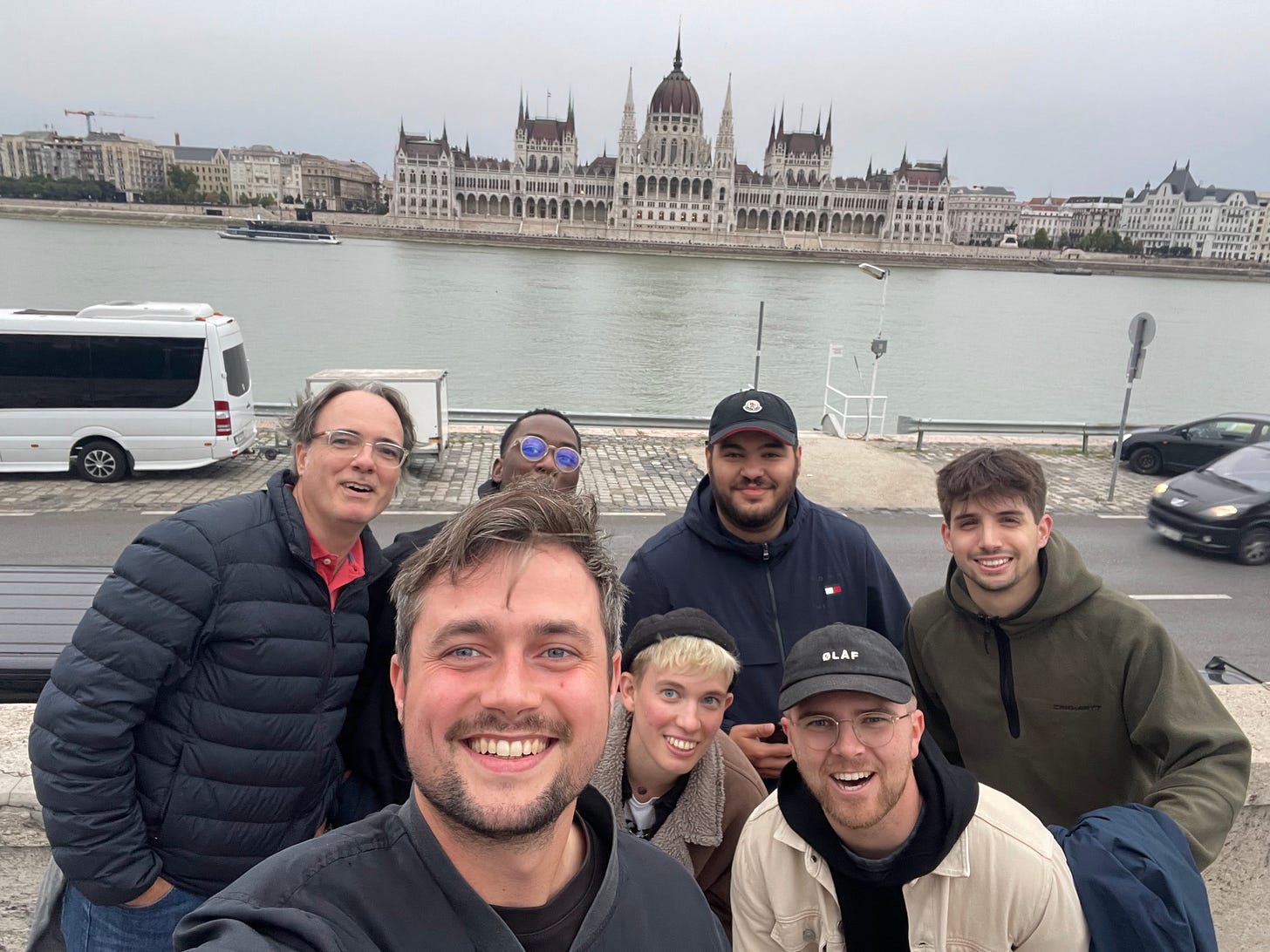
We’ve just closed off another season and gathered in Budapest to reflect on what was by far the most challenging period we’ve gone through. We managed to hit the jackpot on most of the common agency pitfalls within a few months; collaboration issues, planning issues, difficult clients, burnout and projects running over endlessly. In a way, we’re being a victim of our own success as we’re doubling our revenue this year, but it did really show us that growing an agency can be a messy and chaotic process. It’s comfortable to imagine a linear line upwards when thinking of scaling, but with so many variables, clients, team members, cash flow, so many things that have to be timed well, it almost certainly never is. It’s been hard to focus deeply on our theme (improving our craft) as we scrambled to fix urgent issues in the short-term. However, actively thinking about how we can raise the bar on our products and our day to day struggles has brought us a ton of insights:
More collaboration with debriefs We started introducing more meetings, which doesn’t sound like an improvement until you realize how little we had before. We simply added a debrief after every client call, where the team can just shortly ask that extra question or clarify something vague, without the pressure of the client being there. Simple change but really effective so far.
Delegation and burnout To fix problems within the studio, Yous and I both tend to employ one strategy; ‘I’ll just go in and fix it’, locking ourselves up, disappearing and hopefully coming back with everything done. This option always feels like the best one when the pressure is high. During the summer, Yous burned out so badly on a project so he had to tap out and take a break. To pick up the work that was left, unsurprisingly, I employed the same strategy. The bigger our plates get this way, the less we think about long-term solutions, making it easier to get stuck in an endless backlog. When we were smaller, this would work, but now that the company has grown, this is just unsustainable. By not delegating, we’re also taking away responsibility from the team, signaling that we don’t trust anyone else to do it. It’s the hardest skill to learn, but I hope we can let go this upcoming season.
Tech Lead + PM team To fix the resourcing issues we had, I needed someone to take over PM duties - Kas, our studio lead, has a great relationship with our clients and was excited to take on the role. We’ve decided to keep Kas there and train them to take the lead on all our products. When Youssef got back from his break, I wanted to make sure he got back into a role that’s more suitable - before, he was essentially a founder, a CTO and a full-time builder at the same time. He has stepped into a Tech Lead role now, helping the team with architecture decisions, integrations and planning out builds. It’s a huge improvement and I’m happy to see Kas and Yous step into these roles together.
Traineeships With Youssef in his new role, we were positioned a lot better to welcome our first trainee, Daan, to the team. Daan is incredibly smart and passionate about no-code, but didn’t have Bubble experience so far. We took a bet on him and we’ve been blown away by how fast he’s been able to pick things up with the right guidance. It’s ridiculous to see in practice how quickly a smart and motivated person can become a full-stack dev with Bubble.
A full team Aside from that, we’ve finally hired an in-house Plugin developer and a dedicated QA tester. With the other shifts within the team, we finally have all the roles filled that we had in mind originally. We’re just a few weeks in, but it looks like we’re finally able to get ahead of our integration & testing backlogs.
Ugly versions We’ve been using an almost waterfall approach to our projects in the past year or two, doing a few weeks of design then a few weeks of build. The biggest reason for this is how we plan our resources, so a team member can fully focus on a project, then move on to the next. As we’re designing features, we haven’t fully researched the tech yet, so we might commit to building something that’s going to be a time sink. By the time a dev starts building a feature, they run into difficulties that influence the design and have to start freestyling, creating another loose end. Because I was working solo on a few projects again, I started experimenting with something we call “ugly versions”. It’s so easy to create something functional in Bubble, most of the time goes into creating something that looks good, so I decided to reverse the process to get crucial client feedback early on. Before design starts, I basically sketch out a bunch of ideas and walk through these with the client. Once that input is gathered, I take an evening or two to build a horrendous, terrible, extremely ugly version of the feature in Bubble, until it’s completely functional. The ugliness is there so clients only give us feedback on how it works. Somehow, this gets a better reaction than a set of Figma screens because clients see the actions and data changing. It’s also really nice to have a version to throw away in case the data model is off. We’ve caught a lot of project-delaying changes this way, and it’s changed the typical dynamic of clients changing scope, because we essentially ask for it in this stage. Iterating on this version takes very little time, and at the end, it’s a great briefing for both the designer, our tester, our plugin dev and our builders.
Fixed scope projects We’ve been doing fixed scope projects since early last year, and to be fair, we’ve never done a project that hasn’t gone over time. Our choice for this model has always been based on general advice, it’s always framed as being objectively better for agencies, but when I started asking myself about quality, I just couldn’t make it fit anymore. Anyone who makes software knows that it’s easy to build a quick fix, but hard to build something that stands the test of time. With our fixed scope model, we have no incentive to think long-term. In fact, we have an incentive to be done as soon as possible. This strategy has failed us as we moved away from MVPs, as any rushed build from the past comes back to haunt us with bugs. That’s the biggest mismatch; we’re selling like we’re building websites, but we’re actually building complex systems that constantly grow. Even though we do a ‘one-time project’, it’s very unlikely clients will move to a different dev shop. So essentially we’re committing to a long-term relationship with anyone we work with. If we frame it as a one-time expense, we’re not being entirely honest. With fixed scope projects, either the client wins (we go over time) or we win (we have budget left). None of those feel fair to us. If every project is a long-term commitment, I want us to think about the long-term for clients, being proactive, proposing simpler solutions, constantly researching and prototyping ideas. Being involved instead of being reactionary. We’ve realized that in order to raise the bar, we need to try to find a different model than the one we have now.
This season I’ve been working on a pilot program for a new model that aligns our incentives with clients - we’ve been calling it the studio model. From October to December, we’re locking up our entire team for the same 5 clients. These clients pay a monthly fee that translates into a budget to spend over the 3 months across disciplines. We’ve assigned them certain periods where we’ll be building more heavily, but we’ll be constantly tweaking, researching, scoping and ideating for these clients. Because we can just focus on a handful of products, we can focus our attention on improving these instead of closing new clients. In this model, it would actually make sense for us to spontaneously move clients to the new responsive engine, do user research or start refactoring a piece of backend that introduces a lot of bugs. We’re capping our profit potential this way, but I’m extremely excited about this model. With our full team, our new approach and everyone in the right position, I think we can get a lot more quality work done and introduce more calm into the business, or most likely, the other way around. Our theme for this season is a well-oiled machine. With all the pieces in place and our clients booked, we just need to ship. In order to nail this new model, all our focus should be on creating the right conditions, a great rhythm, high-trust team and fine-tuned processes. Perhaps that will lead us to the real craftsmanship we looked for. We’ll let you know how it goes.
Cheers, Mike and the Minimum team
|