Studio memo - Year 5, Season 3
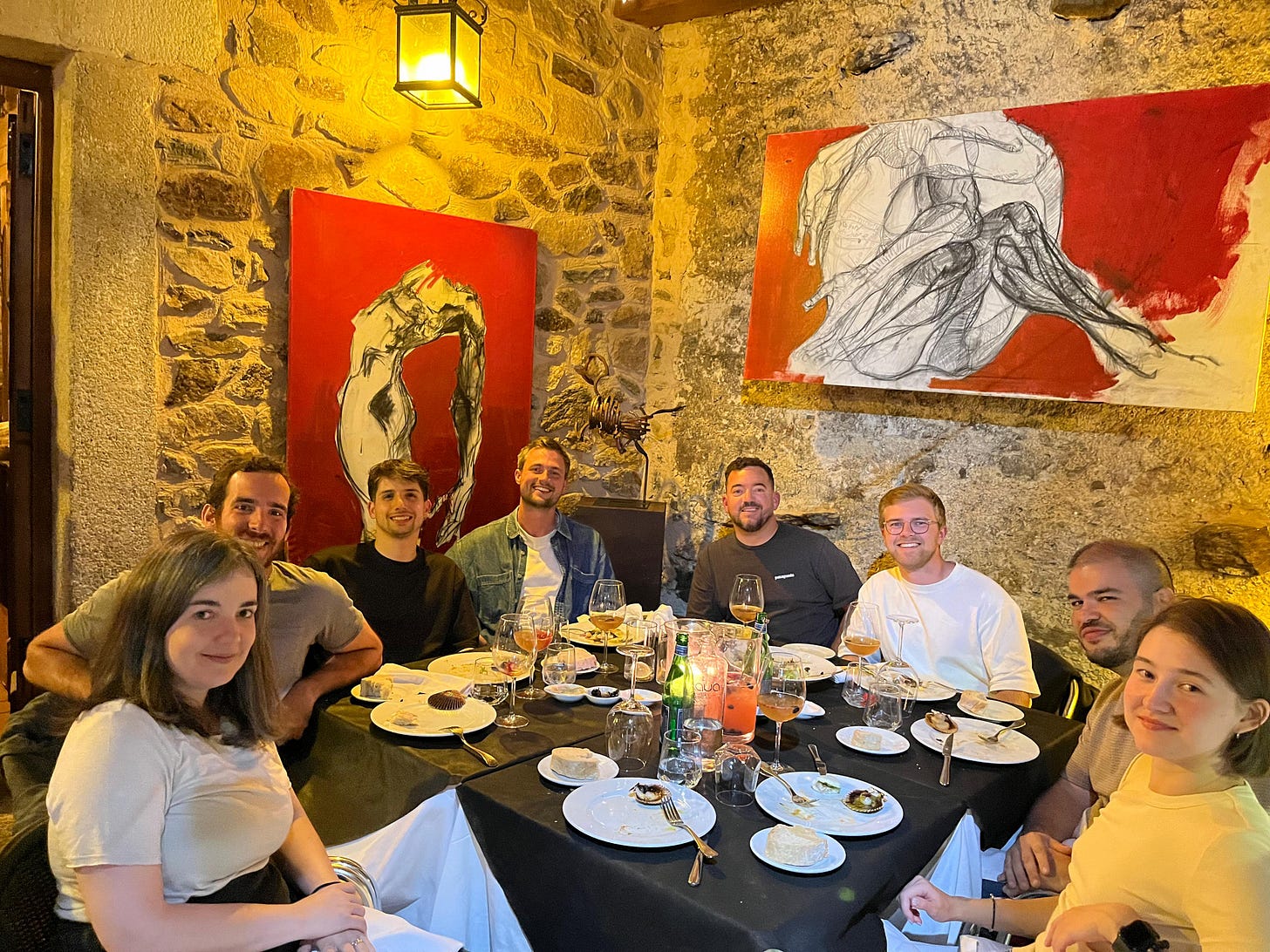
Just arrived back home from our retreat in 🇪🇸 Madrid. Especially after an eventful season, this moment always feels great. After a few months of pushing a theme the energy starts to dissipate a bit and spending a week together completely recharges it. Last season’s theme was Small Bets. After growing the agency to this point and laying the groundwork, we noticed we were approaching some kind of local maximum - our only path to growth being hiring more people and going for bigger clients. We feel like we have more to offer, so we wanted to run some experiments to find a new, more creative path. Like any team, we also had a few major challenges on our mind, so we settled on the idea of a ‘small bet’. Any problem, opportunity or idea would be converted into something that we could execute on in a day, and anyone could pitch or run an experiment. My favorite thing about this is the framing - by calling something a bet, you take away the assumption that it’s going to work. It’s clear that these things can fail, and since they’re small, they’re easy to discard. This makes it much easier for the team to focus on taking action and helps us avoid overthinking. Usually the themes are meant to apply some focus, so this was quite a dangerous one to settle on, but I’m super happy we did it. We ended up running 39 small bets and made some great progress. Let’s get into it.
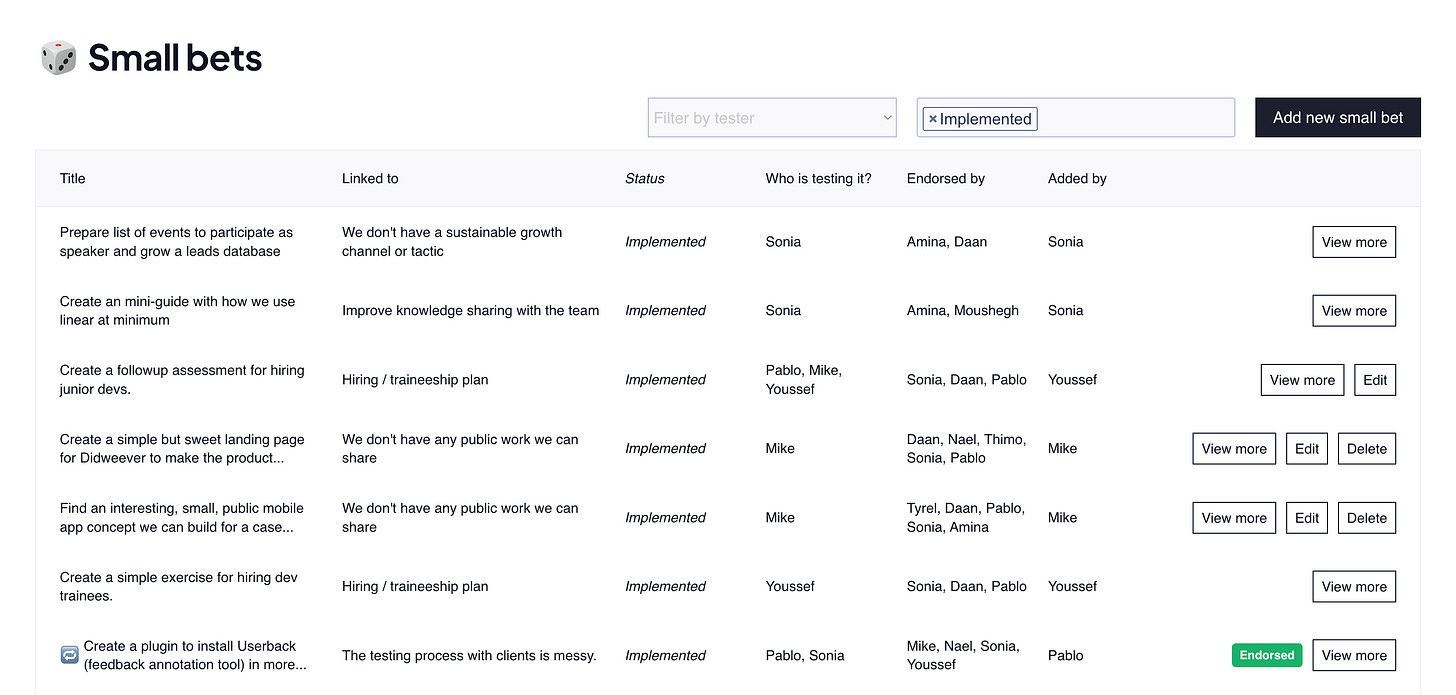
The Betting BoardAs always, we started with creating an ugly prototype in Bubble to track the bets. This took a few hours, and allowed us to integrate it with other pieces of our operating system. Being able to spin up custom tools so quickly is such a nice way to solidify these new ideas within the team. New bets are automatically pushed to Slack, and people can endorse, or click a ‘Make it smaller!’ button if they think it’s too big. That led to some really fun conversations and it forced us to do really tiny iterations.
ChallengesFixing the studioThe majority of our revenue comes from ongoing clients. They work with us through our studio service where we function as their fractional product team. Since this is such a close relationship, we’ve had issues with creating clear systems around how we work and managing expectations on both sides. Through small iterations, we ended up doing a few big changes:
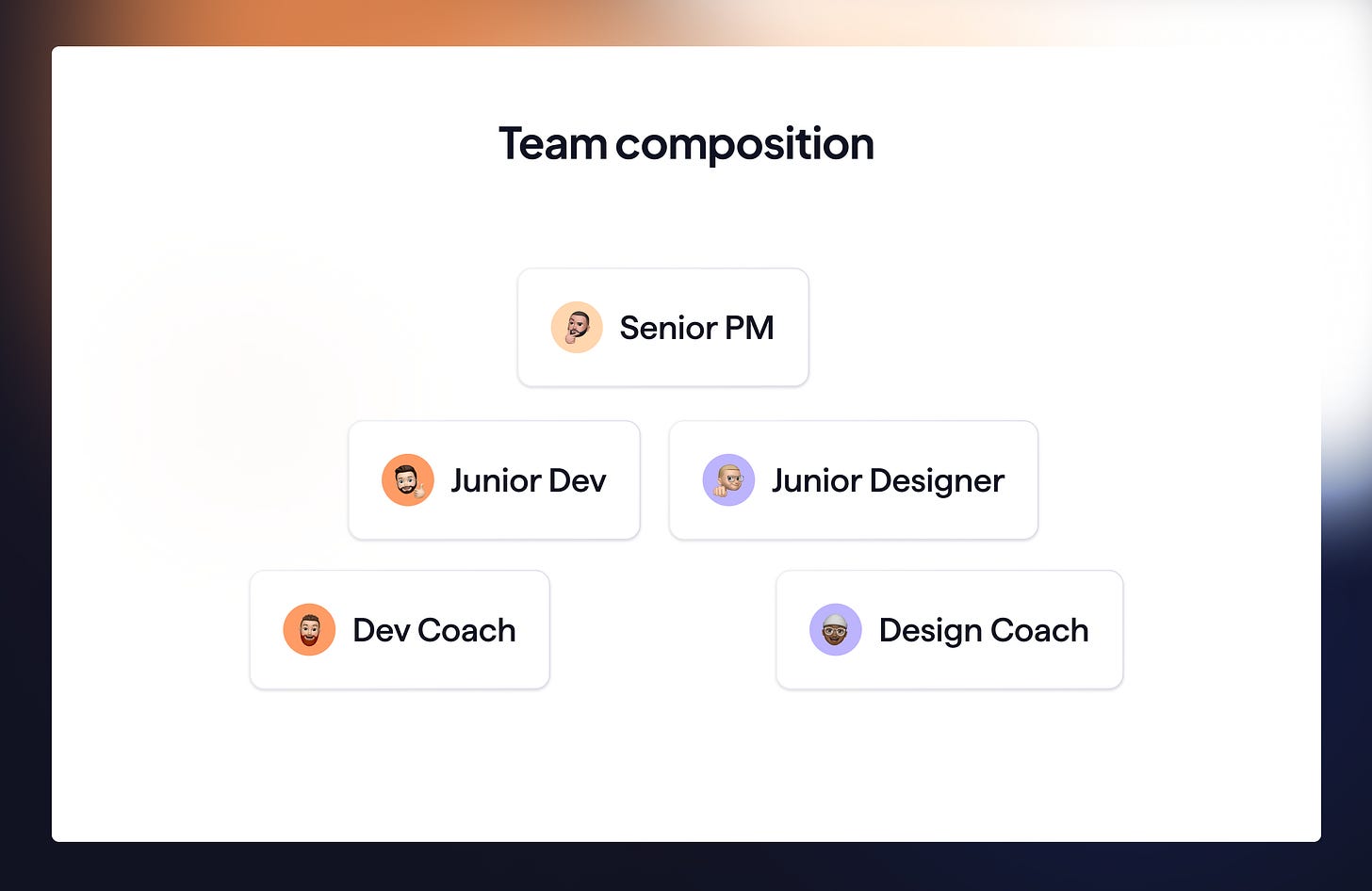
HiringIdeally, an agency has a healthy mix of junior to senior talent, and we were pretty much 80% seniors, so we had to figure out how to find, hire and train junior talent. We ended up hiring 4 new people this season, which is pretty huge for us considering we were with 7 people a few months ago. We used the small bets to get there step by step:
It’s really exciting to see how straightforward it is to welcome new people with all the structure we’ve created in the past few seasons. We also have a really strong idea of who would fit our culture, which has really paid off when I look at these new hires and how easily they’ve blended into the team.
DelegationDelegating feels like cleaning your room. You know you’ll be much happier when you do it, there are no arguments against it, you know you’ll be forced to do it someday, and you still put it off. With more opportunities on our mind, I decided I really needed to delegate more lower leverage tasks. I had run a ton of small bets before it clicked, but I managed to:
I had to be really patient with it to get results, but once it’s set up, it creates a lot of space and everything flows a lot better.
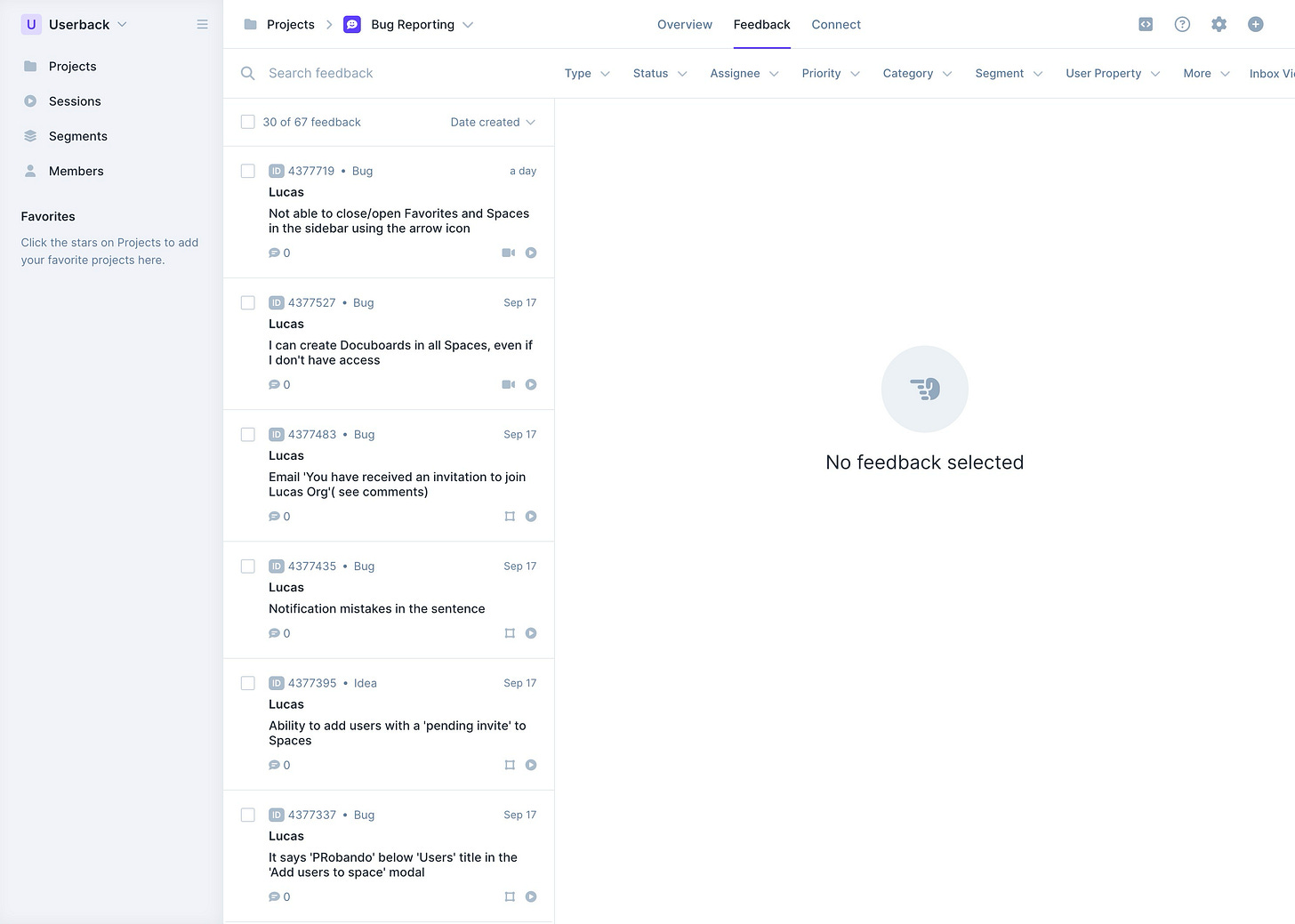
Client feedbackWe still had quite a messy system for clients to share feedback, so we decided to implement Userback - an embedded widget that people can use to share feedback and bug reports. It’s one of those super obvious things that takes only an hour to set up, which now got pushed forward because of the bets idea.
OpportunitiesOff to the more exciting part - the new ideas we were able to push forward.
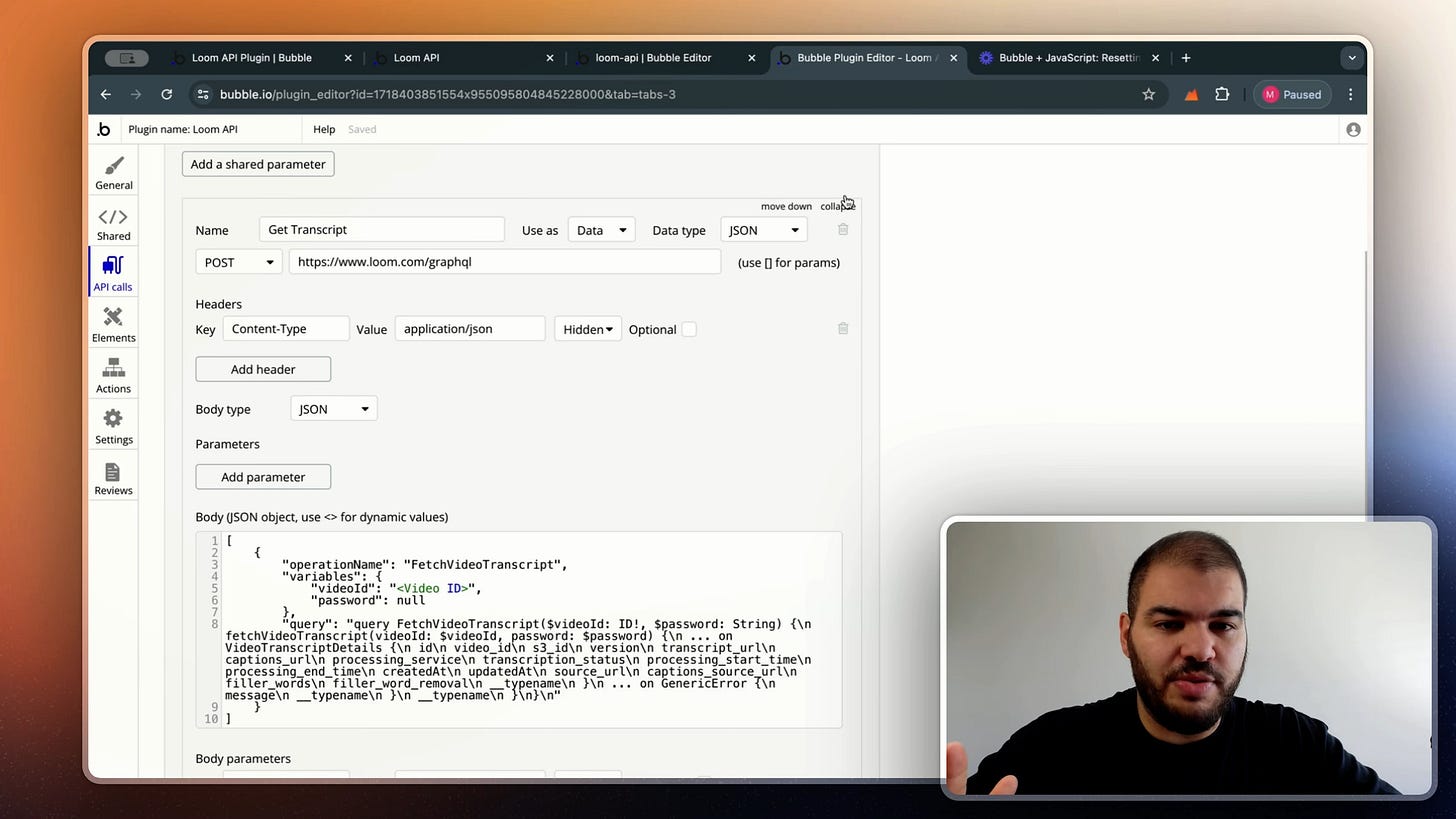
The Plugin CourseYoussef has been spending his time condensing everything that he knows about building Bubble plugins (that’s a lot of info) into a course for other Bubble devs. Especially now with AI-assisted coding, we think it’ll be a super powerful way for people to level up. We launched the pre-order, tested a few iterations of the content with early access users and tested out a Youtube channel with plugin tips, which gave us quite some signal that this is a solid route to explore. Creating a course was completely new for us and a lot harder than we thought, but we’re very close to launching the full version soon.
DidweeverA few months ago we had this idea for a ‘contextual AI’. As an async company, all of our interactions with each other are stored somewhere and we figured we could feed that all to a large language model to do interesting things with it. We did multiple iterations on this idea to come up with the first idea in this series - a super simple product called Didweever. It pulls in Slack, Linear, Grain, Gmail and Loom interactions, so everyone involved in the project can ask ‘Did we ever talk about XYZ?’, to find exactly where and when a discussion happened. There was quite some infra work we needed to do to build the foundation for this to use internally, and we’ve shared a landing page which was well received with quite some people on the waitlist. We started using it internally and although it’s really powerful, we don’t feel like we have a killer use case yet, so we’re going to prototype a bit more with people on the waitlist these upcoming months and solve some more specific problems.
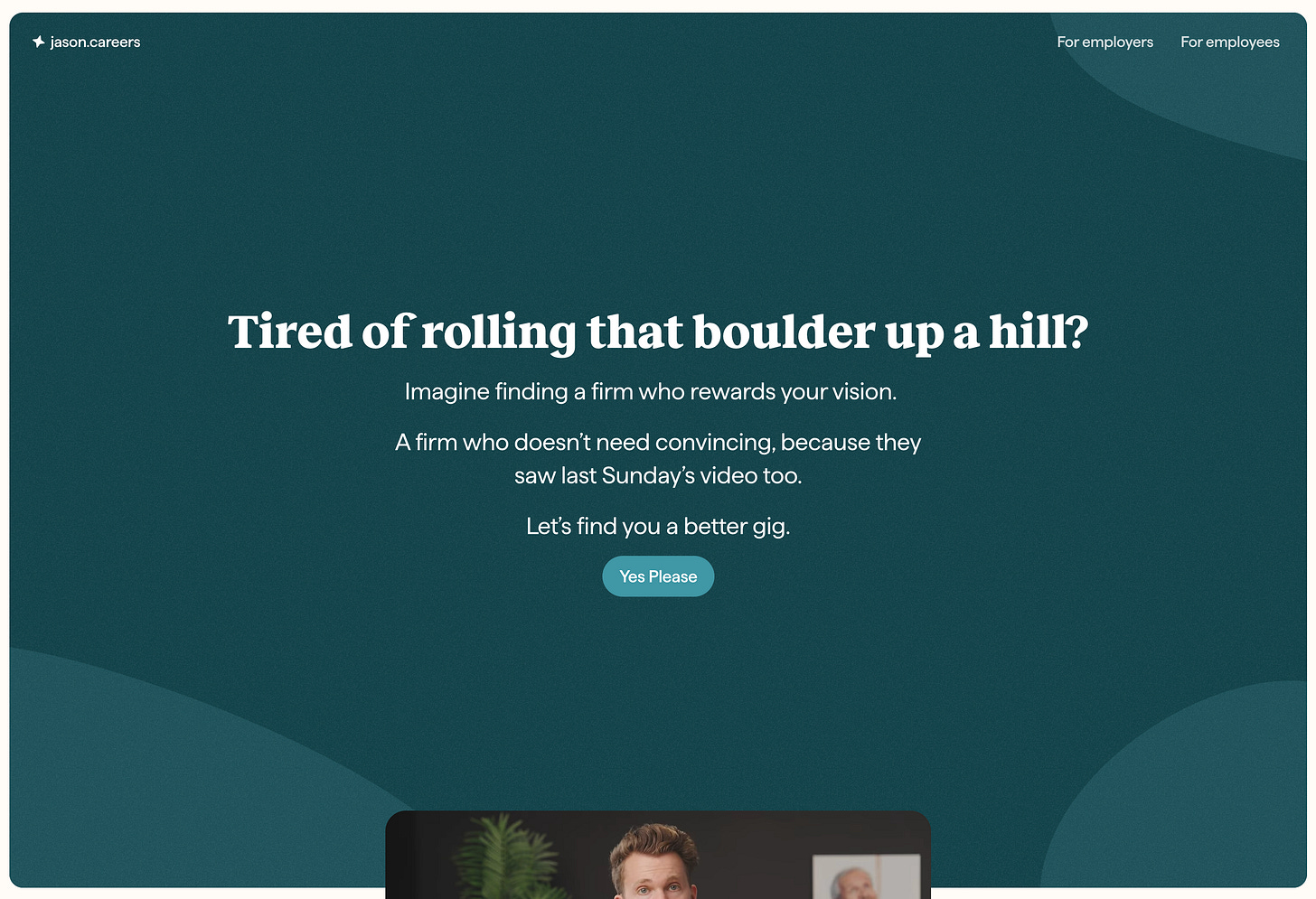
Product StudioLast but not least, we started working on a joint venture with Jason Staats and his team. Jason has a loyal following and lots of experience in the accounting space. We originally started working together through the agency and our working style lined up really well. After finishing up that project, we both got the idea to figure out a partnership, so we just had to explore that route. The idea is simple - Jason covers distribution and industry knowledge, we cover product and ops. He has deep insights into what problems can be solved and a great connection with his audience, we have the tools and skills to ship quickly. We can try out many ideas and get feedback quickly, every successful project feeding into the next one. We started with launching Jason’s Careers together, a recruitment service for progressive accountants. This is the first ‘bet’ of our collaboration and we’ve been iterating on the model since we started. The good news is that we’ve made our first revenue, so we know there’s potential here to build something real.
What’s next?With all those things tested out, we achieved what we had in mind - a different structure with more alternative paths for growth. Roughly speaking, we now have the:
All built on the same skillsets & ideas. To give these the attention they need, we probably need to do the opposite from this season and apply more focus. The main bottleneck for pushing these new paths is freeing up time, which we can only really do when our new junior team members are fully up to speed. Coding with AI is also coming up quickly and I think that means the ‘no-code’ label is going to lose its’ charm quite soon. We won’t really be able to rely on our hard skills as a proposition, so people will need to hire us for our way of working. If everyone on the team can work from the same mindset, I believe we can stay relevant forever. With that in mind, our theme for this season is Training Season. I’ll let you know how it went in January. Cheers, Mike and the Minimum team.
|